English translation of the original personal essay; historical observations, figures and legal discussion reflect its publication date. Some photographs were not embedded in the supplied PDF; available images and the original captions are retained.
A week has passed since I returned to China from the Netherlands. By day I rush between work commitments; late at night I revisit the journey. I pour a small glass of red wine and put a few words down, letting memories become a record before they blur. After my account of the Van Gogh Museum, here is a more unusual visit: Amsterdam’s Sexmuseum.
Less than five minutes after leaving Amsterdam Centraal, I was standing at 18 Damrak. Tourists crowded the area; the air carried coffee, the sweetness of caramel waffles and the clanging of trams. Above me, a slightly weathered sign read: SEX MUSEUM.
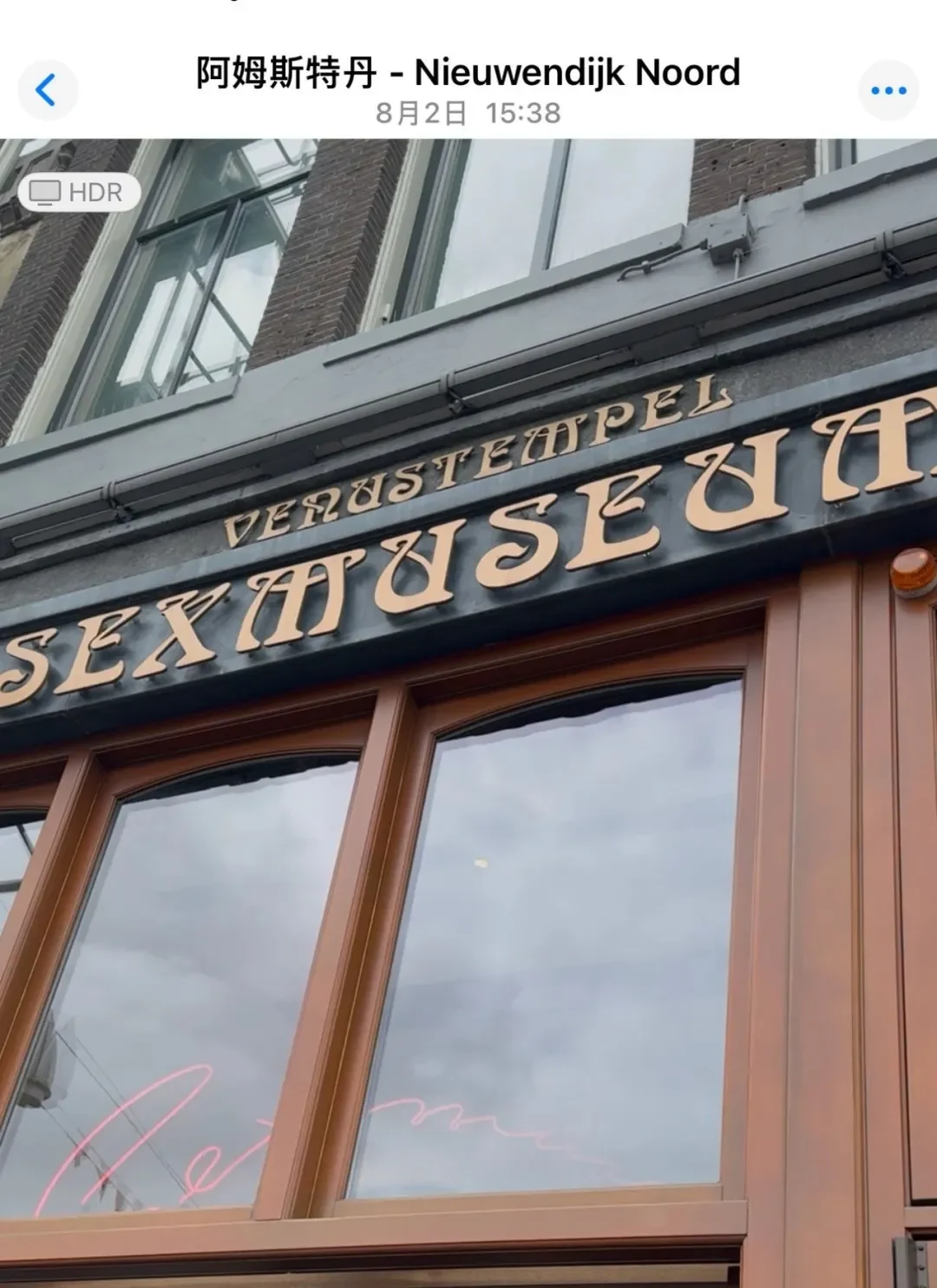
Before your imagination runs away with you, this is no adult show under dim neon lights. It is one of the world’s earliest museums devoted to sex: Sexmuseum Amsterdam, the Venustempel, or Temple of Venus. Its framework is a seventeenth-century house, with timber beams, narrow stairs and creaking floors.
🎟 Tickets and thresholds
The ticket seller smiled: “Ten euros, please.” Some parts of the website said €9, others €10—Dutch prices, it seemed, were as changeable as the weather. A large sign beside her read “16+ Only”. Even a baby carried in someone’s arms could not enter. Openness, with boundaries: that is Amsterdam.
🌀 Through a labyrinth of desire
Inside was a corridor lined with old photographs, engravings and woodcuts: nude sculptures from ancient Greece, nineteenth-century portraits of lovers, erotic scrolls from the East. It felt like turning the pages of a substantial history of sexuality.
Narrow wooden stairs divided the space into little worlds. At every turn came a different soundtrack—whispers, laughter, panting—as though one were overhearing private episodes from the past.
The rooms’ names carried stories of their own:
• Mata Hari—dancer, spy, an embodiment of desire and espionage.
• The Marquis de Sade—a name synonymous with sadomasochistic literature.
• Oscar Wilde—rebellion and freedom in the Victorian age.
• Madame de Pompadour—the passions of the French court.
Entering them was like opening successive biographies, except that wax figures, display cases and sound told the stories in place of words.
🌹 A timeline of sensuality
In one gallery, Marilyn Monroe wore her famous white dress, its skirt lifted by air from the subway, her smile as radiant as a flower just opened.
Opposite her was a Renaissance painting of Venus, gentle and reserved. Across several centuries, the two female figures seemed to converse in the gallery.
There were also ancient Egyptian fertility figures, intricate Victorian erotic objects and Amsterdam’s mechanical street character, the “potloodventer”—literally a pencil seller, a teasing reference to an exhibitionist.
These were more than provocations: they were slices of history, cultural records of how people have expressed love and desire.
😂 Humour is more disarming than provocation
What made me laugh was a little mechanical theatre in a corner. Through a peephole, wooden puppets interacted clumsily to a looping soundtrack, like an old-fashioned sitcom.
This is what makes the Sexmuseum distinctive. It does not hurry to make you blush; it dissolves embarrassment through humour, leaving you relaxed enough to look and think.
⚖ Balancing openness and rules
At the stairs I saw an accessibility notice: there was no lift, and wheelchair users could visit only the ground floor, free of charge. Gender-neutral toilets were on that floor. There was no gift shop and no coffee for sale. Photography was permitted, but not flash, selfie sticks or long videos.
This little museum was not a social-media attraction manufactured for photographs. It asked visitors to slow down and pay attention.
🚶♂️ Leaving the temple
I pushed open the seventeenth-century wooden door and Amsterdam’s wind rushed in. As the noise of the street returned, I realised that for the past hour or more I had been reading another history of humanity—one without changing dynasties or the smoke of war, only love, bodies, desire and the traces they leave in different cultures. End.