English translation of the full Chinese essay.
When Mingyue first entered practice, he learnt the law under a mentor.
His mentor had a habit: anything important must be put in writing.
Sometimes a long meeting would cover every advantage and disadvantage, every gain and loss. The client would nod repeatedly: “I understand. I understand.”
Mingyue thought the matter finished.
But his mentor would call him over. “Print it out and ask the client to read it again. If there are no objections, have it signed.”
Mingyue did not understand.
One day, after a client had left, he asked, “You explained all those risks so clearly face to face. The client said everything was understood. Why put it on paper and require a signature as well?”
His mentor was putting away a file. He stopped, looked at Mingyue and said, “You are new to practice. You do not understand yet.”
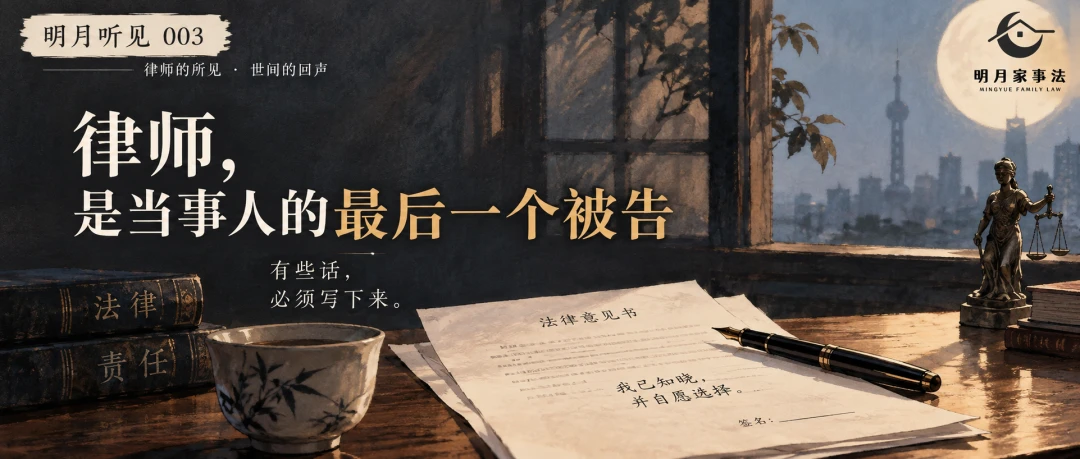
After a pause, he added, “A lawyer is the client’s last defendant.”
Mingyue was taken aback.
His mentor said no more.
At the time, Mingyue thought him seasoned and prudent—perhaps excessively cautious.
Only after years in practice and encounters with many people did he recognise the truth in those words.
When things go well, everyone remembers their own ideas.
When things go badly, not necessarily.
What a client once insisted upon may later become: “Why did you not talk me out of it, Mingyue?”
A risk already explained may become: “Mingyue never told me.”
A choice carefully weighed and personally made may, years later, shrink to a single question: “Why did you let me do that?”
It is human nature to claim success as our own and seek someone responsible for disappointment.
Advice from friends and relatives was only a remark over dinner, with no record to consult. The opposing party has long since moved on. The judge has delivered a decision and stepped out of the case.
Looking back, the file remains. Mingyue remains.
And so the lawyer becomes the last person still there to be questioned.